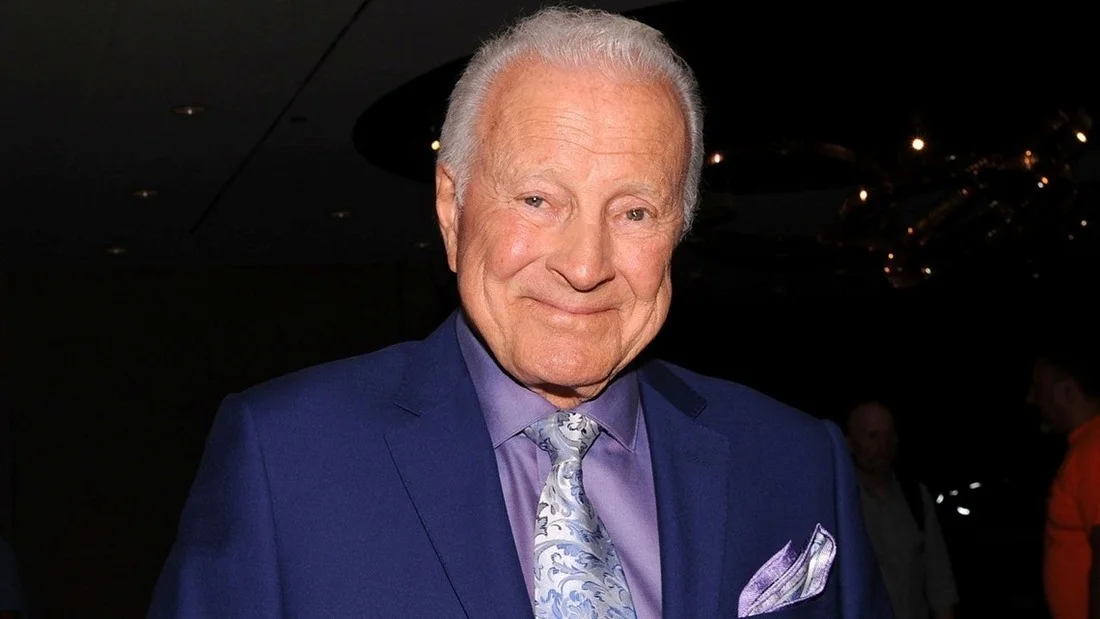
When you hear the last name “Waggoner,” depending on your generation, you might think of two very different things. You might picture the rugged, wood-paneled glory of the Jeep Wagoneer cruising down a highway, or you might think of the chiseled jawline of 1970s television icon Lyle Waggoner. But there is a third, equally compelling figure who operates just outside the glare of the red carpet. That figure is Beau Waggoner.
While his father was cracking jokes on The Carol Burnett Show and saving the world on Wonder Woman, Beau Waggoner was learning a very different trade. He wasn’t learning how to block a punch or deliver a punchline; he was learning how to fix a leaky roof on a trailer and scrub a sanitation tank. This is the story of a man who had every excuse to ride his father’s coattails but chose to scrub the floor instead. It is a masterclass in humility, business acumen, and the art of building something real in a town known for smoke and mirrors. In an era of nepotism, babies, and instant fame, his rise to the presidency of Star Waggons stands as a refreshing anomaly.
The First Question: Jeep or Actor? Untangling the Name
Before we dive deep into the boardroom, we have to address the elephant in the room—or rather, the spelling bee. If you search for “Beau Waggoner” online, you will inevitably run into a thicket of confusion. You will find articles about the legendary Jeep Wagoneer, and you will also find references to a Duke University cross-country runner named “Bo Waggoner”. For the record, the actor’s son spells his name Beau, distinct from the SUV and the athlete. It is a name that evokes a certain Southern charm, fitting for a man who runs a company with a firm handshake rather than a flashy Instagram account.
The confusion with the Jeep Wagoneer is actually a fitting coincidence. Just as the Jeep Wagoneer revolutionized the automotive industry by creating the luxury SUV segment in 1963, Beau Waggoner helped revolutionize the film industry. He took the concept of mobile trailers and turned them into a luxury necessity. So, while you might have clicked here looking for specs on a V8 engine, you are about to discover the blueprint of a business engine. And honestly, the story of the man is just as durable and reliable as the story of the machine.
The Hollywood Bloodline: Life as Lyle Waggoner’s Son
To understand the environment Beau grew up in, you need to look at his father. Lyle Waggoner wasn’t just an actor; he was a symbol. In the late 1960s and 70s, he was the male sex symbol of television. Standing six feet four inches with a head full of hair, Lyle was the announcer and straight man on The Carol Burnett Show, a gig that brought him into America’s living rooms every week. Later, he famously played Major Steve Trevor (both the father and the son) opposite Lynda Carter in Wonder Woman.
Growing up in that environment, Beau Waggoner could have easily fallen into the trap of the “Hollywood brat.” He had access to the sets, the stars, and the easy money. But the Waggoner household, surprisingly, wasn’t all glitz. Lyle Waggoner was a practical man. He saw the volatility of show business early on. While his acting career provided the fame, Lyle was shrewd enough to know that fame fades, but infrastructure endures. In 1979, Lyle made a pivot that would define his family’s future. He started Star Waggons, a company that rented customized motorhomes and trailers to production sets . He went from being in front of the camera to providing the bathroom and dressing room for the people in front of the camera. It was a genius move, and into that environment, Beau Waggoner was thrust as a young man.
Straightening the Record: Who is Beau Waggoner?
Let’s get the facts straight. Rumors and misinformation are floating around the internet, as there always are with private individuals connected to celebrities. Some sources claim he founded “Beau & George Enterprises,” a product development firm . However, the most consistent and verifiable records place him squarely at Star Waggons. While his brother, Jason Waggoner, took a winding road through oil and banking before joining the family business, Beau took the straight path—starting at the absolute bottom .
Unlike the flashy trust-fund babies you see on reality TV, Beau Waggoner operates with a blue-collar ethos wrapped in a white-collar title. As of recent records, he holds the position of President at Star Waggons. His net worth is estimated to be in the range of $1 to $1.5 million, which is modest compared to his father’s $10 million fortune, but it is money he earned through sweat equity . He is not a man who relies on the past; he is an architect of the present.
Washing Trailers and the “Ty-D-Beau” Nickname
If there is a single image that defines the character of Beau Waggoner, it’s this: a young man with a famous father, wearing rubber gloves, holding a pressure washer to a septic tank. When Beau started at Star Waggons 27 years ago (as of a 2016 profile), his father didn’t hand him the keys to the executive washroom. He handed him a mop.
Beau has openly joked about his early days, sharing how his nickname on the lot was “Ty-D-Beau,” a play on the popular toilet bowl cleaner “Ty-D-Bol” . For seven years, he worked in sanitation. Imagine that for a second. Seven years of cleaning up after actors, makeup artists, and crew members. While his dad was rubbing elbows with Carol Burnett, Beau was scrubbing floors. He washed trailers, repaired them, and did the jobs that no one else wanted to do.
This is a critical piece of the puzzle. In the family business world, the “inheritance” of a CEO position often ruins the company because the successor lacks respect for the grind. By forcing Beau to start in sanitation, Lyle Waggoner ensured that his son knew every bolt, every leak, and every complaint a customer could have. When Beau eventually taught himself design and architecture, moving up to head of manufacturing, he wasn’t guessing. He knew exactly what worked and what broke.
Star Waggons: The Disneyland for Film Stars
To understand the scale of what Beau Waggoner manages, you have to look at the product itself. Star Waggons is not a U-Haul rental place. They build and rent high-end mobile dressing rooms, production offices, and medical suites. These aren’t just trailers; they are multi-million dollar suites on wheels. Prices for a single unit can range from $80,000 to $200,000 to buy, and rental fees can hit $10,000 per week for the top-tier models .
When you see a Hollywood star walking out of a trailer with their name on the door, there is a high probability that the trailer was built, maintained, or rented by Beau’s team. These units are the backbone of the film industry. They serve as the actor’s sanctuary between takes, the writer’s quiet room, or the director’s war room. In 2015, Star Waggons generated a staggering $17 million in revenue, marking an 18% increase from the previous year . Under the leadership of Beau, the company didn’t just survive the changing landscape of Hollywood; it thrived, pivoting to streaming services and digital productions just as easily as it served network television.
The Brother Dynamic: Jason and Beau
No story about a family business is complete without looking at the siblings. Beau Waggoner isn’t the only son. His brother, Jason Waggoner, is also a key part of the operation . However, the path Jason took offers a fascinating contrast to Beau’s “Ty-D-Beau” route.
Jason initially avoided the family business altogether. He cut his teeth in the high-stakes worlds of oil and banking . It was only after establishing an external career that Jason returned to Star Waggons in 2002. He brought with him a perspective from the outside—corporate strategies, financial discipline, and a network that didn’t overlap with the backlots of Burbank. Having both brothers involved gives Star Waggons a unique “one-two punch.” Beau provides the institutional knowledge (knowing how to build the product) and the operational grit, while Jason provides the external business perspective. Together, they ensure that the company is both well-built and well-run.
Architecture and Design: The Self-Taught Genius
One of the most impressive aspects of Beau Waggoner’s biography is his education—or rather, his lack of formal education in his chosen field. While many luxury brand CEOs hold MBAs, Beau took a different route. He began studying architecture on his own. He taught himself design principles, spatial planning, and manufacturing logistics through hands-on experience.
In an interview, he detailed how he moved from sanitation to manufacturing. He didn’t hire a consultant to redesign the trailers; he did it himself. He understood that an actor’s dressing room needed a specific flow—privacy for changing, accessibility for hair and makeup, and quick exits to the set. His self-taught architectural eye turned the utilitarian “trailer” into a “mobile office.” He transitioned the company from simply renting boxes to renting high-functioning luxury spaces. That shift in value perception is what separates Star Waggons from its competitors.
Life Away from the Spotlight: Privacy and Personality
Unlike his father, who lived for the applause, Beau Waggoner seems to actively avoid the public gaze. He has kept his personal life fiercely private. As of the latest available data, he is reported to be single, with no public records of a wife or girlfriend . In an era of “influencers” and “content creators,” a man running a multi-million dollar company without an Instagram handle is almost an anomaly.
There is, however, a curious footnote when researching the name. A dating profile on a niche site for “Plus Size Dating” surfaces for a user named “beauwagner13” (spelled with one ‘g’) from Loveland, Colorado . This profile describes a single, athletic, self-employed man who likes movies and camping. It is entirely unconfirmed if this is the same Beau Waggoner (the location and the spelling of the last name differ from the Los Angeles-based businessman). But the speculation is interesting because it paints a potential picture of a regular guy. Whether it is him or not, the real Beau has successfully maintained a firewall between his corporate life and his private life. He seems to value hiking, building, and “getting in touch with old friends” over walking the red carpet .
The Loss of a Legend: Lyle Waggoner’s Passing
On March 16, 2020, the world lost Lyle Waggoner at the age of 84. He passed away peacefully at home after a long illness, and it was Beau himself who confirmed the news to Entertainment Tonight . For Beau, this was not just the loss of a celebrity; it was the loss of his business partner, his mentor, and his father.
The death of the founder is always a critical juncture for any business. Many family companies collapse under the weight of grief or the vacuum of leadership. But the years of preparation—the seven years of sanitation, the self-taught architecture, the steady rise through the ranks—had prepared Beau for this moment. The fact that Star Waggons continued to operate and thrive through the uncertainty of the 2020 pandemic (which shut down Hollywood for months) is a testament to the strong handover. Beau Waggoner didn’t just inherit a title; he had earned the right to steer the ship through the storm.
Why His Story Matters in Modern Business
In the current business climate, the “Beau Waggoner model” is increasingly rare. We are living in the age of the “hustle culture” guru, where 22-year-olds in drop-shipping courses promise millions overnight. There is a collective impatience. We want the corner office, but we don’t want the janitor’s closet.
Beau’s story is a heavy dose of reality therapy. He spent seven years doing sanitation. Think about the patience that is required. He didn’t complain that it was “beneath him.” He earned a nickname that compared him to a toilet cleaner and laughed about it. He rebuilt a company from the chassis up, not because he had a brilliant PowerPoint deck, but because he understood the physics of the product.
This is relevant whether you are running a film rental business or a hardware store. The “Beau Waggoner” philosophy is this: Master the dirt, and you earn the right to touch the sky. He is a living rebuttal to the idea that success is purely about leverage and luck. It is about tenure and tenacity.
The Legacy Continues
Today, the future of Star Waggons looks bright. With the resurgence of filmmaking and the explosion of streaming content, the demand for high-quality mobile production facilities is higher than ever. The company his father started in 1979 is now an industry standard, largely due to Beau’s insistence on quality design and manufacturing.
While his father, Lyle, will always be remembered for his smile, Beau Waggoner should be remembered for his hands. One man built an image; the other built the infrastructure. It is rare that the sequel is better than the original, but in the story of the Waggoner family, the son’s quiet dedication to the grind is perhaps more inspiring than the father’s brush with fame. He is a Hollywood story for people who don’t really like Hollywood—a story about hard work, humility, and horsepower.
Conclusion
The narrative of Beau Waggoner defies the typical celebrity-child trope. While he could have leveraged his last name for a life of ease, he chose the weight of responsibility. He hauled hoses, scrubbed decks, and learned the geometry of a living space before he ever signed a check as President. In a town known for its ephemeral nature, he built something permanent. Whether you are an aspiring entrepreneur, a film buff, or just someone tired of the noise, the story of this man offers a quiet, powerful lesson. The most glamorous thing you can have isn’t a famous face; it’s a strong work ethic. And in Beau Waggoner’s world, that is the only currency that matters.
Frequently Asked Questions
Is Beau Waggoner related to the actor Lyle Waggoner?
Yes, absolutely. Beau is the son of Lyle Waggoner, the legendary actor from The Carol Burnett Show and Wonder Woman, and his wife, Sharon Kennedy. He is the younger of their two sons, with his older brother being Jason Waggoner.
What does Beau Waggoner do for a living?
Beau Waggoner is the President of Star Waggons, the premier company in Hollywood for renting and manufacturing luxury mobile trailers and dressing rooms. He started at the company as a teenager washing trailers and worked his way up through sanitation and manufacturing before taking the helm.
Why was Beau Waggoner called “Ty-D-Beau”?
This was a good-natured nickname he earned during his early days at Star Waggons. For seven years, Beau managed the sanitation department, cleaning the trailers. Staff compared him to the toilet cleaner “Ty-D-Bol,” so they called him “Ty-D-Beau” as a joke about his dedication to cleaning.
How did Beau Waggoner learn to design trailers?
He is a self-taught architect and designer. While working at Star Waggons, he began studying architecture independently. He used that knowledge to transition the company from simply renting trailers to manufacturing high-end, luxury mobile units that are now standard in the film industry.
Is Beau Waggoner married or does he have a wife?
Based on public records and biographical data, Beau Waggoner appears to be currently single. There are no verified reports or press releases regarding a girlfriend or wife, as he keeps his personal life very strictly out of the public eye.
What is the net worth of Beau Waggoner?
Estimates place the net worth of Beau Waggoner at approximately $1 to $1.5 million. This wealth is primarily derived from his executive role at Star Waggons and his business acumen, rather than relying on the $10 million net worth accumulated by his father, Lyle.
How is Star Waggons different from a regular RV rental?
Star Waggons specifically builds units for the film industry. Unlike a standard RV, which has thick walls and small windows, Star Waggons are designed for workflow. They feature massive windows for natural lighting for makeup, flat floors for camera dollies, and are built to handle the heavy electrical loads of film sets. They are essentially mobile offices and studios, not just campers.