
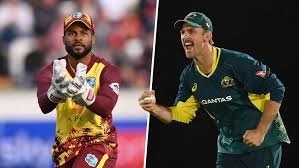
Cricket is a sport built on rivalries. The Ashes often gets the loudest cheers in the English-speaking world, and the India-Pakistan clashes bring a unique geopolitical edge. But for pure, unadulterated cricketing passion, athleticism, and cultural significance, few contests hold a candle to australia vs west indies. This is a fixture that has historically pitted the establishment against the underdog, technique against raw power, and resilience against flair. From the sun-drenched stadiums of Barbados to the boisterous crowds at the MCG, the battle between the Baggy Greens and the Men in Maroon is a narrative spanning nearly a century.
The dynamic of this rivalry is fascinating because it has shifted so dramatically over the decades. There was a time when the West Indies were the students, learning from a dominant Australian master. Then, the roles reversed entirely, and the West Indies became the “Unbeatables,” a tag team of fearsome fast bowlers who terrorized batting lineups worldwide, including Australia’s. Today, the balance has tipped again, with Australia holding the upper hand in recent memory, but the Caribbean spirit remains unbroken. Whether you are a statistician pouring over scorecards or a casual fan who just loves a good six, the clash between these two cricketing nations offers a little bit of everything.
To truly understand the modern context of australia vs west indies, we have to look at the rich tapestry of history, the statistical milestones, and the recent series that continue to write new chapters. This rivalry is not just about the game; it is about the migration, the music, and the mentality that defines Caribbean and Australian culture. So, grab a cold drink, settle in, and let’s take a deep dive into one of sport’s most compelling narratives.
A Tale of Two Eras: The Shift in Power
The history of australia vs west indies in Test cricket reads like a classic sporting drama with a clear three-act structure. The first act, spanning from 1930 until the mid-1970s, was largely dominated by Australia. According to historical stats, the two sides have played well over 100 Test matches against each other, with Australia holding a significant advantage in the win column . In those early days, the West Indies were the exciting newcomers—talented but inconsistent, often struggling against the disciplined Australian lineups led by legends like Don Bradman. Australia won the first four series played on home soil, establishing a psychological dominance early on .
However, the second act is where the story gets really interesting. The late 1970s through the 1990s marked the rise of the West Indies as a global superpower. This was the era of Clive Lloyd, Viv Richards, and a pace battery that still gives batsmen nightmares: Andy Roberts, Michael Holding, Joel Garner, Malcolm Marshall, and later, Curtly Ambrose and Courtney Walsh. During this “golden age,” the Windies won four consecutive series in Australia . They weren’t just winning; they were imposing. They bowled Australia out for paltry scores like 76 in Perth in 1984 and defended low totals with venomous fast bowling . The tables had turned completely. For an Australian batsman in the 1980s, facing the West Indies was the ultimate test of courage.
The third act brings us to the modern era. Since the late 1990s, Australia has reasserted their dominance. The retirement of the great Caribbean fast bowlers left a void that has been difficult to fill. Meanwhile, Australia’s golden generation—the Waughs, Warne, McGrath, and later Ponting and Clarke—capitalized ruthlessly. The period from 2000 onwards saw Australia produce clean sweeps, including the infamous 5-0 whitewash in the 2000-01 Frank Worrell Trophy series . This shift highlights the cyclical nature of sport; empires rise and fall, and currently, the baggy green flies high over the Caribbean in terms of recent head-to-head results, including the comprehensive 2025 tours.
The Stats That Define the Battle
When you dig into the numbers behind australia vs west indies, the respect between these two teams becomes quantifiable. The names that top the run-scoring and wicket-taking charts are a who’s who of cricket royalty. For the West Indies, Brian Lara stands tallest, amassing a colossal 2815 runs against Australia at an average over 52 . His ability to score big against the Aussies, including a majestic 277 in Sydney in 1993, cemented his place as a modern great. He is closely followed by the swaggering Viv Richards, who treated the Australian bowlers with disdain, scoring 2266 runs, and the gritty Desmond Haynes, who provided the solid foundation at the top of the order .
On the Australian side of the ledger, the run-getters reflect their eras. Steve Waugh, the ultimate streetfighter, tops the charts with 2192 runs against the Windies . His mental toughness was perfectly suited to combating the Caribbean pace attacks. Ricky Ponting, with his 1977 runs, and Allan Border, with 2052, round out the top three—batsmen who had to navigate the most dangerous bowling attacks in history . When it comes to wicket-takers, the bowling honors are incredibly tight. Glenn McGrath’s line and length yielded 110 wickets for Australia, but it is the West Indian duo of Courtney Walsh (135 wickets) and Curtly Ambrose (128 wickets) who lead the overall tally, proving that great fast bowling was the cornerstone of Caribbean success for decades .
The extreme lows of the rivalry also tell a story. West Indies once crumbled for a mere 51 runs in Port of Spain in 1999, while Australia suffered the ignominy of being bowled out for 76 in Perth in 1984 . These scorelines remind us that on any given day, regardless of the broader trend, the pressure of this fixture can make world-class players look human.
The 2025 Tour: A Masterclass in Australian Dominance
Fast forward to the most recent chapter in the australia vs west indies saga, and the narrative was one of Australian efficiency versus Caribbean inconsistency. The 2025 tour of the West Indies by Australia was a multi-format affair, but it was the white-ball leg that truly made headlines. The T20 International series, in particular, was a brutal display of Australia’s depth and power. The visitors didn’t just win; they obliterated the home side, securing a historic 5-0 series whitewash . It marked the first time the West Indies had ever been whitewashed 5-0 in a T20I series, a sobering statistic for Caribbean fans .
The matches were characterized by clinical Australian performances with both bat and ball. In the fourth T20I in Basseterre, St. Kitts, Australia chased down a mammoth target of 206 with ease, thanks to half-centuries from Josh Inglis and a rampant Cameron Green, who smashed 55 off just 35 balls . The final match of the series saw Australia chase down another total with three overs to spare. The middle order, featuring the power-hitting of Tim David and the composure of Aaron Hardie, simply overpowered the Windies attack . West Indies had their moments—Shimron Hetmyer scored a blistering 31-ball 52 in that final match, and Sherfane Rutherford showed glimpses of brilliance—but they lacked the consistency to sustain pressure on the Australians .
There was a quirky stat to come out of the T20 series as well: Australian captain Mitchell Marsh won every single toss across the three Tests and five T20Is. On each occasion, he made the right call with his decision to bowl or bat first, a small but significant slice of luck that complemented his team’s superior skill . For West Indies, the series was a harsh reality check, highlighting the gap that had grown between their raw talent and the polished execution of a top-tier Australian side.
Statistical Leaders of the 2025 Tour
The individual performances in the 2025 tour underlined the changing of the guard. Let’s take a look at the standout players from that series, as aggregated by ESPNcricinfo .
| Category | Player (Team) | Performance |
|---|---|---|
| Leading Run-Scorer (Tests) | Steve Smith (AUS) | 224 runs at an average of 37.33 |
| Leading Run-Scorer (T20Is) | Cameron Green (AUS) | 205 runs at an average of 68.33 |
| Leading Wicket-Taker (Tests) | Kemar Roach (WI) | 22 wickets at an average of 14.95 |
| Leading Wicket-Taker (T20Is) | Adam Zampa (AUS) | 8 wickets at an average of 14.42 |
While the West Indies suffered in the T20Is, the statistics show that the Test matches were a slightly closer affair. Kemar Roach, the veteran fast bowler, toiled hard for the hosts, picking up 22 wickets and proving that the Caribbean fighting spirit was alive and well in the longest format . For Australia, Steve Smith continued his love affair with run-scoring, topping the charts in the red-ball games, while Cameron Green announced himself as a genuine superstar in the making with his T20 exploits .
The Road to the T20 World Cup 2026
As the dust settled on the 2025 bilateral series, both teams immediately shifted focus to the ultimate prize in the shortest format: the ICC Men’s T20 World Cup 2026, co-hosted by India and Sri Lanka. The squads announced for this global event reflect the distinct philosophies of the two boards. For the West Indies, who have won the T20 World Cup twice (2012 and 2016), the goal is to recapture the magic on the subcontinent.
The West Indies squad for the 2026 World Cup is a fascinating mix of experience and explosive potential. Shai Hope, who has transformed his T20 game significantly in recent years, was named captain, tasked with leading a unit packed with match-winners . The squad includes power-hitters like Shimron Hetmyer, Rovman Powell, and the big-hitting Sherfane Rutherford. Head Coach Daren Sammy emphasized the importance of having all-rounders to provide depth, with the likes of Jason Holder and Romario Shepherd offering pace and batting lower down the order . A notable inclusion was Quentin Sampson, the “Breakout Player” of the 2025 Caribbean Premier League, signaling that the Windies are willing to blood young talent on the biggest stage .
Daren Sammy expressed his confidence in the squad, stating:
“This group has the firepower to beat anyone on their day. It’s about harnessing that Caribbean flair and applying it smartly in the conditions. We have the pace, we have the spin, and we have the six-hitters. The key is consistency.”
Australia, the champions of the 2021 edition, also had their selection headaches. The biggest talking point leading into the World Cup was the inclusion of Steve Smith. Initially left out of the squad, Smith was officially added as a replacement for the injured Josh Hazlewood . Smith’s return added a layer of technical solidity to a top order known for its aggression. His recent form in the Big Bash League was scintillating, and although his overall T20I strike rate might not scream “power-hitter,” his ability to anchor an innings and manipulate the field in the middle overs is invaluable in the subcontinent. Alongside captain Mitchell Marsh, Travis Head, and Glenn Maxwell, Australia boasts a lineup that can demolish any bowling attack.
Why This Rivalry Still Matters
In an era where franchise cricket often blurs national lines, why does australia vs west indies still capture the imagination? It comes down to cultural contrast. Australian cricket is often described as relentless, competitive, and systematic. They play hard, they train harder, and they rarely give an inch. West Indies cricket, by contrast, is rhythmic, instinctive, and joyful. It is a reflection of the Caribbean islands themselves—relaxed until the moment it’s time to explode into action. When these two philosophies collide on the field, the result is compelling television.
Quotes from legends often sum up this dichotomy. The late, great Richie Benaud once described the atmosphere of the tied Test in 1960 as “cricket’s greatest advertisement.” Meanwhile, Brian Lara once noted that “scoring a hundred against Australia always felt the most satisfying because they never stop coming at you.” It is this mutual respect, forged through decades of fierce competition, that elevates the fixture.
Key Players to Watch in the Next Chapter
Looking ahead to the next encounters, likely to be centered around the T20 World Cup, there are specific players who will define the future of australia vs west indies. For the Australians, keep your eyes on Cameron Green. His performance in the 2025 West Indies tour was a breakout moment. At 6’6″, he offers a unique angle with the ball and immense power with the bat. He is the prototype of the modern cricketer. Alongside him, the spin wizardry of Adam Zampa will be crucial on turning tracks. Zampa reached a milestone of 100 T20I appearances during the 2025 series, and his ability to take wickets in the middle overs disrupts the opposition’s flow .
For the West Indies, the hopes rest on the broad shoulders of their power hitters. Shimron Hetmyer, when in form, is one of the most destructive batsmen in the world. His ability to clear the boundary at will makes him a constant threat. On the bowling front, the return of Alzarri Joseph from injury will be vital. If he can lead the attack with the new ball and at the death, backed by the experience of Jason Holder, the Windies have the firepower to trouble Australia. The x-factor, however, could be Gudakesh Motie. The left-arm spinner has a knack for containing runs and taking wickets, a valuable asset in the T20 format.
The Unpredictability of T20 Cricket
While the history books show Australian dominance in recent years, the T20 format is a great leveler. The beauty of a T20 World Cup clash is that it only takes 20 overs for a team to change the narrative. The West Indies, despite their 5-0 loss in the bilateral series, enter World Cups with a different mentality. They play without fear. As they demonstrated in their T20 World Cup 2026 squad announcement, they have selected players specifically for their ability to win games in high-pressure situations .
Australia, on the other hand, relies on their “process.” They build pressure in the field, utilize match-ups cleverly with the ball, and rely on their deep batting lineup to chase down any total. The upcoming matches, potentially on slow Indian pitches or tricky Sri Lankan tracks, will test both teams’ adaptability. Will Australia’s methodical approach triumph, or will the Caribbean flair light up the subcontinent once again?
Conclusion
The story of australia vs west indies is far from over. It is a living, breathing history lesson that continues to be written with every delivery. From the graceful strokeplay of Viv Richards and Steve Waugh to the thunderous fast bowling of Curtly Ambrose and Pat Cummins, this rivalry showcases cricket at its most raw and exciting. The 2025 series served as a reminder of the current gap between the two sides, but the T20 World Cup 2026 looms as the perfect opportunity for redemption.
As the teams prepare to potentially face off in the global tournament, fans can expect a clash that honors the past while embracing the future. Whether you are cheering for the Baggy Green or the Men in Maroon, one thing is certain: when Australia and West Indies share a field, cricket is the real winner. The passion, the pace, and the pride ensure that this iconic rivalry will endure for generations to come.
Frequently Asked Questions (FAQ)
When did the Australia vs West Indies cricket rivalry begin?
The rivalry began in the 1930-31 season when the West Indies toured Australia for the first time. Australia won that inaugural Test series 4-1. Since then, they have played over 100 Test matches against each other, with the Frank Worrell Trophy being the prize in the longest format of the game .
Who has the better head-to-head record in Australia vs West Indies Tests?
Historically, Australia holds the better record. As of late 2015, Australia had won 56 Tests compared to West Indies’ 32, with 24 draws and one tie. However, West Indies dominated a significant period between the late 1970s and early 1990s, winning four consecutive series in Australia .
What happened in the Australia vs West Indies 2025 T20 series?
Australia toured the West Indies in 2025 for a full series including Tests and T20Is. In the T20I leg, Australia was utterly dominant, winning the five-match series 5-0. It was the first time the West Indies had ever suffered a 5-0 whitewash in T20 Internationals. Players like Cameron Green and Josh Inglis starred with the bat, while Adam Zampa marked his 100th T20I with crucial wickets .
Who are the leading run-scorers in Australia vs West Indies Test matches?
For the West Indies, the late Brian Lara is the leading run-scorer, with a massive 2815 runs against Australia. He is followed by Sir Vivian Richards (2266 runs) and Desmond Haynes (2233 runs). For Australia, Steve Waugh leads the way with 2192 runs, followed by Allan Border (2052 runs) and Ricky Ponting (1977 runs) .
Where can I watch the upcoming Australia vs West Indies matches?
Broadcast rights vary by country. Typically, in Australia, games are broadcast on platforms like Fox Sports and Kayo Sports, or free-to-air on Channel Seven (for selected matches). In the Caribbean, the rights are usually held by SportsMax or Flow Sports. For global tournaments like the T20 World Cup 2026, the official ICC broadcast partner will show the matches worldwide.australia vs west indies
Has Steve Smith been included in Australia’s T20 World Cup 2026 squad?
Yes. Steve Smith was officially added to Australia’s squad for the T20 World Cup 2026 as a replacement for the injured fast bowler Josh Hazlewood. Smith, who was in excellent form in the BBL, provides experience and stability to the batting lineup for the matches in Sri Lanka and India .
Why are the West Indies considered dangerous in T20 cricket despite recent losses?
The West Indies are the only team to have won the T20 World Cup twice (2012 and 2016). Their squad is filled with power-hitters who can change a game in a single over. They also have a deep pool of all-rounders. In a short format like T20, individual brilliance can often overcome a lack of recent team form, making them a constant threat in tournament settings .australia vs west indies