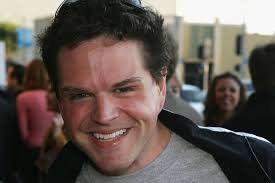
There are some faces that, even if you don’t immediately recall the name, you instantly recognize and associate with a feeling of nostalgia. For fans of late 90s and early 2000s television and film, Ron Lester was exactly that kind of presence. With a booming laugh, a gentle giant demeanor, and undeniable comedic timing, Ron Lester carved out a niche for himself in Hollywood that was entirely his own. He is forever etched in pop culture history as Billy Bob, the lovable, cake-eating, soul-searching linebacker from the 1999 classic “Varsity Blues.” However, to define him solely by that one role would be a disservice to a complex individual who battled personal demons, underwent a life-altering physical transformation, and continued to create art until the very end.
Lester’s journey from Kennesaw, Georgia, to the glitz and glamour of Hollywood is a story of raw talent meeting sheer determination. He wasn’t the typical leading man mold that Tinseltown often tries to cast. Instead, he was a character actor in the truest sense—someone who could walk onto a set and immediately make the scene better, funnier, and more real. Off-screen, his life was a narrative of struggle and triumph, dealing with severe obesity, life-threatening surgery, and ultimately, a battle for his health that he fought publicly and privately with grace. This is the long-form story of Ron Lester, a man who made us laugh, broke our hearts, and left us too soon.
From Kennesaw to Hollywood: The Early Years
To understand the man, you have to look at where he came from. Ron Lester was born on August 4, 1970, in the unique town of Kennesaw, Georgia. In a quirky piece of trivia that Lester himself loved to share, Kennesaw is famously known for an ordinance that requires every head of household to own a firearm and ammunition. Lester humorously described his personal style as “Gucci Country,” a perfect phrase that captures the blend of Southern charm and aspirational flash that defined his personality .
Growing up, Lester attended North Cobb High School. It was here that the seeds of performance were first planted, though he might not have recognized them at the time. He participated in local rodeos and took part in school theater productions, but these were more outlets for fun than serious career moves. Tragedy struck during his high school years with the death of his sister, an event that plunged him into a deep emotional darkness. He later revealed that the grief was so overwhelming he contemplated suicide, a stark reminder that behind the public smile, he was battling profound personal pain .
His accidental entry into the world of acting is the stuff of Hollywood legend. It didn’t start with a headshot and a talent agent, but with a can of cleaner. Lester went to Atlanta to work as an extra in a commercial for Formula 409. His natural screen presence was so magnetic that the director rewrote the script to feature him more prominently. This serendipitous moment was followed by an appearance in the music video “Kick a Little” for the country band Little Texas, directed by Jon Small. Once again, producers saw something special in him, reshaping the video to focus on his charismatic persona . These small breaks gave him the confidence to take the leap. Driven by the belief that he had a natural gift, he packed his bags and moved to Los Angeles. Unlike many actors who struggle for years to get a foot in the door, Lester’s arrival in Hollywood was marked by a swift ascent, beginning with stand-up comedy at iconic venues like The Laugh Factory and The Improv, where he honed the timing and delivery that would define his film career .
Breaking Through: Good Burger and the Road to Varsity Blues
The move to Los Angeles paid off almost immediately. Lester’s very first audition for a feature film landed him the role of Spatch in the 1997 Nickelodeon film “Good Burger.” In a cast full of comedic heavyweights from the network’s sketch comedy series “All That” (including Kenan Thompson and Kel Mitchell), Lester held his own. Spatch was a small but memorable role, and it served as his official introduction to the film industry . It was proof that his instinct to pursue acting was the right one.
However, it was 1999 that would prove to be the watershed year for Ron Lester. He landed the role that would define a generation’s view of high school football: Billy Bob in “Varsity Blues.” Directed by Brian Robbins, who had also directed “Good Burger,” the film was a gritty, raunchy, and dramatic look at the pressure-cooker environment of Texas high school football. Lester played Billy Bob, the oversized offensive lineman with a passion for chocolate pudding cake and a deep-seated confusion about his identity, torn between the brutal expectations of his coach (Jon Voight) and his own desire for self-expression.
The role of Billy Bob was more than just comic relief. While his scenes involving the cake were hilarious, Ron Lester brought a profound vulnerability to the character. He later spoke about how the role resonated with him on a deeply personal level. “I had the same feelings that my character had,” he told Movieweb. “Jon Voight is like a father figure to me, and after doing this movie, he’s just the greatest mentor I had. There were times, like in those scenes where he was chewing me out, I allowed the emotion to come out, because it was real” . This authenticity is what made Billy Bob a fan favorite. You didn’t just laugh at him; you rooted for him. The image of Billy Bob, face painted, scoring the winning touchdown, is one of the most iconic moments in sports film history.
Life in the Spotlight: Popular and Parody
With the success of “Varsity Blues,” Ron Lester became a sought-after talent in Hollywood. He capitalized on this momentum by diving into the world of television. He landed the role of Michael “Sugar Daddy” Bernardino on the WB’s satirical teen drama “Popular.” The show, created by Ryan Murphy (who would go on to create “Glee” and “American Horror Story”), was a hyper-stylized look at the absurd social hierarchies of high school. As Sugar Daddy, Lester was the gentle giant friend to the popular kids, and his performance earned him two consecutive Teen Choice Award nominations for “Best Sidekick” . The role solidified his status as a beloved figure in the teen TV landscape of the era. During this same period, he also made memorable guest appearances on other iconic shows, popping up in the short-lived but dearly loved “Freaks and Geeks” and even stopping by “Sabrina the Teenage Witch” .
Perhaps the ultimate sign that you have made it in pop culture is when you become the subject of parody. In 2001, Ron Lester starred in “Not Another Teen Movie,” a spoof that relentlessly mocked the tropes of the teen film genre. In a brilliant meta-moment, Lester played Reggie Ray, a character who was a direct parody of his own Billy Bob from “Varsity Blues.” He once again donned the football jersey and even recreated the iconic cake-eating scene, showing that he was more than willing to laugh at himself and his career trajectory. It was a moment of self-awareness that endeared him even more to audiences, proving he didn’t take the fame too seriously .
The Battle with Weight: A Life-Altering Decision
Behind the scenes of his successful career, Ron Lester was fighting a war with his own body. Obese since childhood, his weight had ballooned to a crisis point. At his heaviest, he weighed a staggering 508 pounds . The weight was not just a health risk; it was affecting every aspect of his life and career. The tipping point came during the filming of a television scene. The script called for him to get into a limousine, but physically, he couldn’t fit. The crew had to remove the front seat to accommodate him, and even then, his stomach got stuck behind the steering wheel. “I just broke down and started crying,” he recalled in a 2008 interview with People magazine. “It was humiliating” .
In December 2000, he made the decision to undergo a drastic Roux-en-Y gastric bypass surgery with a duodenal switch . The procedure was risky, and at one point during the operation, Ron Lester flatlined on the operating table. For a terrifying moment, he was clinically dead. Fortunately, the medical team was able to revive him, but the experience was a stark reminder of the gamble he had taken to save his life . In the year and a half following the surgery, he lost an astonishing amount of weight—around 300 pounds. He dropped from over 500 pounds to around 220 .
While the weight loss was a physical miracle, it came with its own set of challenges. He was left with massive amounts of excess skin, a painful and uncomfortable reminder of his former size. He underwent a grueling series of 17 or 18 plastic surgeries to remove the excess skin and reconstruct his body . The emotional and psychological adjustment was just as tough. He was no longer the “funny fat guy” that Hollywood had typecast. “I sold my ‘niche’ for my chance to live,” he told BodyBuilding.com, reflecting on the bittersweet nature of his transformation. “I would never trade the life I have now with… the endless opportunities I have in store for me, with my old life” . The surgery was profiled in media outlets, with his plastic surgeon, Dr. Keith Jeffords, noting the dramatic change, saying, “Under all that skin, there was a good-looking guy!” .
Later Career and The Fat Boy Chronicles
Following his recovery, Ron Lester faced the daunting task of rebooting his career. The roles that had come easily to him before—the lovable, larger-than-life sidekick—were no longer available, simply because he no longer looked the part. It was a strange purgatory for an actor: he was healthier than ever, but the physical brand he had built was gone. He continued to act in smaller roles, but he also shifted his focus to projects that mattered to him on a deeper level.
In 2010, he took on a role that brought his journey full circle. He starred in “The Fat Boy Chronicles,” a film about a morbidly obese teenager struggling with bullying and low self-esteem. Lester played Dr. Jeffords, a compassionate character who helps the protagonist—a role that was undoubtedly informed by his own life experiences. He also served as a co-executive producer on the film, marking his first major step behind the camera .
This move into production was a sign of his evolving ambitions. He wanted to tell stories that mattered. His final major project was “Racing Legacy,” a film released in 2015. This was a labor of love for Lester, who had a well-documented “need for speed.” He was an amateur rally car and track racer, a hobby that stood in stark contrast to his quieter interest in collecting 1:18 scale toy cars . For “Racing Legacy,” he didn’t just star as Roger Hardwick; he also served as a writer, director, and executive producer . It was his vision, his story, and his passion project, demonstrating that he was so much more than just an actor waiting for the phone to ring. He was a creator.
| Project | Year | Role | Significance |
|---|---|---|---|
| Good Burger | 1997 | Spatch | Film debut; broke into the industry . |
| Varsity Blues | 1999 | Billy Bob | Breakout role; defined his career . |
| Popular | 1999-2001 | Sugar Daddy | TV stardom; 2 Teen Choice nominations . |
| Not Another Teen Movie | 2001 | Reggie Ray | Parodied his own “Varsity Blues” character . |
| The Fat Boy Chronicles | 2010 | Dr. Jeffords | First role as Executive Producer; personal story . |
| Racing Legacy | 2015 | Roger Hardwick | Final film; Writer, Director, and Executive Producer . |
A Heart for Others: Charity and the Troops
Beyond the glitz of Hollywood, Ron Lester possessed a profound sense of duty and compassion. Those who knew him spoke of his “unswerving commitment to the US Armed Forces” . He dedicated significant time and energy to completing several tours with the USO and the Armed Forces Entertainment (A.F.E.) to Europe and the Middle East. He went to the front lines to meet with troops, bringing a piece of home and a moment of laughter to men and women serving far from their families. The military personnel embraced him wholeheartedly; during a visit aboard the USS Constellation, the crew and staff affectionately dubbed him a “Jedi Pimp” . This honorific, as quirky as it sounds, was a badge of honor for Lester, signifying that he was accepted and respected by the community he went to support.
His charitable work was also deeply personal. The driving force behind much of his kindness was his mother, Mary Ellen. He was incredibly close to her, often stating that honoring her dreams was his main priority in life. When she passed away from ovarian cancer, the loss was devastating. In her honor, he promised to become deeply involved in charities dedicated to fighting cancer, particularly those affecting children . He understood the pain of watching a loved one suffer, and he channeled that grief into action, supporting organizations that offered hope and help to families going through similar battles. It was this gentle, generous spirit that made his friends and co-stars adore him. Following his death, James Van Der Beek tweeted, “Sad day… #RonLester was a sensitive soul with a huge heart. Everything you loved about Billy Bob was authentically Ron. #RIP bud” .
Final Days and Legacy
The final chapter of Ron Lester‘s life is a poignant reminder of the long-term consequences of extreme obesity. Despite his dramatic weight loss and healthier lifestyle, the years of strain on his body had taken their toll. In September 2015, he was hospitalized due to severe issues with his liver and kidneys. He remained in and out of care for months, and by June 2016, his condition had deteriorated significantly. He was moved from the intensive care unit to hospice care in a Dallas hospital .
On June 17, 2016, at approximately 9:00 PM, Ron Lester passed away. He was 45 years old. The cause of death was liver and kidney failure. In his final moments, surrounded by his fiancée, Jennifer Worland, and his loved ones, the decision was made to remove him from life support, allowing him to pass peacefully . The news sent a wave of sorrow through the entertainment community, particularly among the cast of “Varsity Blues,” who had lost one of their own.
Looking back, the legacy of Ron Lester is multi-faceted. For fans, he will always be Billy Bob, the gentle giant who just wanted to find his place in the world. For aspiring actors, he represents the idea that you don’t have to fit a mold to make it in Hollywood—authenticity and talent will always find a home. For those struggling with weight and self-image, his story is one of incredible bravery. He risked his life to save it, enduring pain and a complete identity overhaul to give himself a second chance. He was open about the humiliation, the fear, and the joy of his transformation.
“The difference is that I am no longer the ‘funny fat guy.’ I sold my ‘niche’ for my chance to live.” — Ron Lester
His final years were spent not just acting, but creating. With “Racing Legacy,” he proved he had stories to tell from behind the camera. His work with the USO showed his character off-screen was just as admirable as the characters he played. Ron Lester left the world too soon, but in his 45 years, he packed in a lifetime of laughter, struggle, triumph, and love. He is a beloved figure of a bygone era of teen films, and his work continues to find new audiences who fall in love with the big guy with the even bigger heart.
Frequently Asked Questions about Ron Lester
Q1: Who was Ron Lester?
Ron Lester was an American actor best known for his role as Billy Bob, the cake-loving linebacker, in the 1999 film “Varsity Blues.” He also starred as Michael “Sugar Daddy” Bernardino on the WB series “Popular” and appeared in films like “Good Burger” and “Not Another Teen Movie.” He was known for his large frame, comedic timing, and later, his very public battle with weight loss .
Q2: How did Ron Lester lose so much weight?
Ron Lester underwent a radical gastric bypass surgery known as Roux-en-Y gastric bypass with a duodenal switch in December 2000. At the time, he weighed over 500 pounds. The surgery was risky, and he actually flatlined on the operating table before being revived. Following the procedure, he lost approximately 300 pounds and subsequently underwent around 17 or 18 plastic surgeries to remove excess skin .
Q3: What were the causes of Ron Lester’s death?
Ron Lester died on June 17, 2016, at the age of 45. His death was caused by liver and kidney failure. He had been hospitalized for several months leading up to his death due to complications with these organs, which were likely long-term consequences of his decades-long struggle with severe obesity .
Q4: What is Ron Lester’s most famous scene?
Without a doubt, Ron Lester‘s most famous scene is from “Varsity Blues” where his character, Billy Bob, is seen eating a massive chocolate pudding cake while discussing his existential crises with his teammates. The scene perfectly balanced humor and pathos and has become a staple of 90s pop culture references. The image of him with a fork in a tin of cake is iconic .
Q5: Did Ron Lester appear in any music videos?
Yes, early in his career before he was famous, Ron Lester appeared in the music video for “Kick a Little” by the country music band Little Texas in 1994. The video was directed by Jon Small, and Lester’s screen presence was so strong that the producers re-wrote parts of the video to focus more on him .
Q6: Was Ron Lester involved in any projects behind the camera?
Yes, later in his career, Ron Lester moved into production and writing. He was a co-executive producer on the film “The Fat Boy Chronicles” (2010). His most significant behind-the-scenes work was on the film “Racing Legacy” (2015), for which he served as a writer, director, and executive producer, in addition to starring in it .
Q7: What was “The Fat Boy Chronicles” about?
“The Fat Boy Chronicles” was a 2010 film in which Ron Lester starred as Dr. Jeffords. The film tells the story of a morbidly obese freshman in high school who endures bullying and rejection. Given Lester’s own personal struggles with weight and bullying, the role was deeply personal. His involvement as an actor and producer helped bring an authentic voice to the story of adolescent obesity .
Q8: Did Ron Lester have any children or was he married?
At the time of his death, Ron Lester was engaged to his fiancée, Jennifer Worland, who was by his side when he passed away. He was not married and did not have any publicly known children .
Q9: Where was Ron Lester from?
Ron Lester was born and raised in Kennesaw, Georgia. He attended North Cobb High School and often spoke fondly of his Southern roots, even describing his flashy-meets-country style as “Gucci Country” .
Q10: What other TV shows did Ron Lester guest star on?
Aside from his regular role on “Popular,” Ron Lester made several memorable guest appearances. He appeared in three episodes of the cult classic “Freaks and Geeks” as a character named Seidleman. He also popped up on “Sabrina the Teenage Witch,” “Cousin Skeeter,” “CSI: NY,” and in the TV movie “The Karate Dog” .
Conclusion
In the grand tapestry of Hollywood stories, the life of Ron Lester stands out as one of profound highs and devastating lows. He was a man who turned a chance appearance in a commercial into a thriving career, capturing our hearts as the soulful Billy Bob in “Varsity Blues.” He navigated the treacherous waters of typecasting, found a second life on television with “Popular,” and displayed a remarkable ability to laugh at himself in “Not Another Teen Movie.” Yet, his most courageous role was played off-screen, in the hospital rooms and operating theaters where he fought to reclaim his health from the clutches of obesity.
His decision to undergo gastric bypass surgery—and the subsequent 17 reconstructive surgeries—was a testament to his will to live. It cost him his “niche” in Hollywood, but it gained him a future, allowing him to fall in love, to race cars, and to step behind the camera to direct his own projects. His dedication to entertaining US troops abroad and his commitment to cancer charities in honor of his mother revealed a man whose heart was as big off-camera as his on-screen persona suggested. When Ron Lester passed away in 2016, the world didn’t just lose an actor; it lost a genuine soul who brought warmth to every scene and every room he entered. His work remains, a digital time capsule of a beloved actor who proved that you don’t need to be a typical hero to be truly unforgettable.