
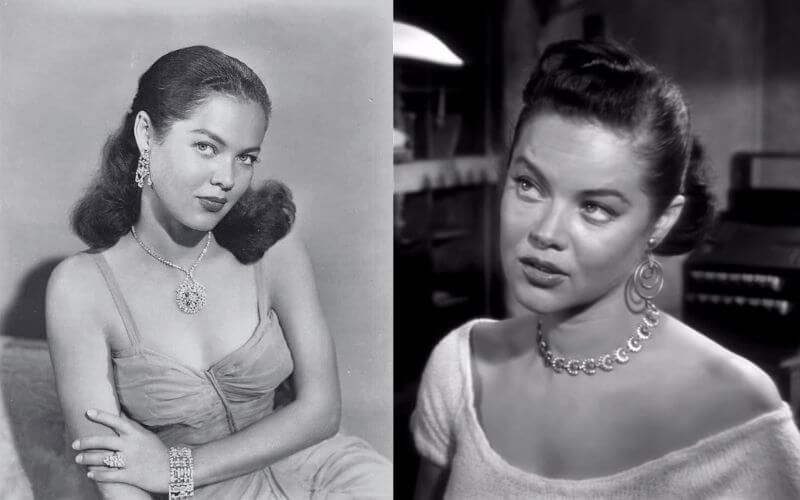
In the golden age of Hollywood, certain names became synonymous with glamour, creativity, and larger-than-life personalities. The name “Travilla” is one of those gems, forever linked to the iconic white dress billowing over a subway grate worn by Marilyn Monroe. But behind every great designer is a family story, and few are as intriguing and refreshingly grounded as the story of Nia Novella Travilla. If you are expecting a tale of wild child rebellion or a desperate grasp for the spotlight, you are in for a surprise.
Nia Novella Travilla was born into the epicenter of showbiz royalty. As the only child of Oscar-winning costume designer William Travilla and multi-talented actress/singer Dona Drake, she had every door to fame wide open. Yet, unlike many celebrity offspring who chase the flash of paparazzi cameras, Nia turned her back on the red carpet to embrace a life of service, science, and schnauzers. This article dives deep into the life, lineage, and legacy of a woman who had every right to be a diva but chose to be a doctor instead. We’ll explore her famous parents, her brief moments in the public eye, and the purposeful private life she built away from the Hollywood hustle.
The Golden Birth: A Legacy of Silver Screen Excellence
To truly understand the choices of Nia Novella Travilla, you first have to look at the dazzling, chaotic world she was born into on August 16, 1951, in Los Angeles, California. This wasn’t just any childhood; it was an immersion into the highest levels of cinematic artistry. Her father was dressing the biggest stars on the planet, and her mother was navigating the complex waters of studio-era stardom. Growing up in this environment meant that creativity was the air she breathed, and excellence was the baseline expectation. However, witnessing the intense pressures of fame likely played a significant role in her later desire for privacy.
While her peers were idolizing movie stars from the stands, Nia saw them in her living room. She saw the fittings, the arguments, the exhaustion, and the magic behind the curtain. This unique perspective gave her a maturity that many children lack. She understood early on that the glittering facade of Hollywood often hid a much more complicated reality. This understanding is the critical lens through which we must view her entire life. She wasn’t rejecting her family; she was simply choosing a different rhythm—one that beat to the sound of heartbeats, not the click of camera shutters.
The Visionary Father: William Travilla
We cannot discuss Nia without paying homage to the legendary man who gave her the second half of her name. William Travilla, known professionally simply as Travilla, was a titan of costume design. He wasn’t just making clothes; he was crafting icons. His work on films like “The Adventures of Don Juan” earned him an Academy Award, but it was his collaboration with Marilyn Monroe that cemented his legacy in pop culture history. He designed the rose-pink gown for “Gentlemen Prefer Blondes” and, most famously, that white halter dress in “The Seven Year Itch”—a dress that would eventually sell for nearly $5 million.
For Nia, however, he wasn’t just a genius designer; he was “Dad.” There is a touching story published in The San Francisco Examiner where Travilla opened up about the difficulty of watching his little girl grow up. He famously hired her to work at a salon and discussed the delicate transition of designing clothes for her as a teenager, admitting he had to balance his professional eye with a father’s protective instincts. This anecdote reveals a man who was deeply involved in his daughter’s life, trying to guide her into adulthood with the same precision he used to create movie magic. His death in 1990 was undoubtedly a massive turning point in her life.
The Resilient Mother: Dona Drake
While the father is the headline, the mother is the hidden plot twist in the story of Nia Novella Travilla. Dona Drake was born Eunice Westmoreland in Florida, but her path to Hollywood required a complicated negotiation of identity. In an industry rife with racial prejudice, Dona often performed under a guise of exoticism, sometimes presenting as Mexican or Latin American to secure roles that would have been denied to an African American performer. She was a singer, a dancer, a bandleader, and an actress, appearing in films like “Road to Morocco” and “Beyond the Forest.”
This chameleon-like ability to navigate harsh environments likely taught Nia the value of inner strength over outer appearances. Dona married William Travilla in 1944, and though they separated in the mid-1950s, they remained legally married until she died in 1989. Witnessing her mother’s resilience and the sacrifices required to maintain an entertainment career likely solidified Nia’s decision to keep her own life simple and authentic. Nia inherited not just her mother’s features but her fierce independence—the courage to walk away from a system that demands you be something you are not.
A Childhood Among the Stars
What was it actually like to be a child in the Travilla household? By all accounts, it was a blend of high fashion and homey chaos. The family had a collection of exotic pets, which foreshadowed Nia’s eventual career path. While other kids were reading comic books, she was likely surrounded by sketches, fabric swatches, and the chatter of actresses preparing for galas. Because her parents remained legally married but lived separately for a significant portion of her youth, Nia experienced a duality in family life that taught her adaptability.
Her teenage years brought a rare moment of public collaboration with her father. In the late 1960s, a newspaper feature showcased Nia modeling a gown designed specifically for her by Travilla. The article discussed her transition from girl to woman, framed through the lens of fashion. It was a soft launch into society, a hint that perhaps she might follow in his footsteps. Yet, even in these photographs, there is a sense of calm, a shyness that contradicts the bold world of costume design. It was the last time the public would really see her as a participant in the Hollywood machine; soon after, she would pivot entirely.
Education and the Shift to Science
Perhaps the most radical decision in the life of Nia Novella Travilla was her academic path. While many assumed she would study theater design or acting, she turned her gaze toward biology and medicine. Sources indicate that she pursued a degree in Biology before earning her Doctor of Veterinary Medicine (DVM). This wasn’t a casual hobby; this was a serious, decade-long commitment to a profession that requires grit, intelligence, and a strong stomach.
Why veterinary medicine? It was a complete inversion of her parents’ world. Her father worked with people who pretended for a living; her mother performed roles that were often fabricated. Animals, however, do not pretend. They do not care about your pedigree or your last name. Nia Novella Travilla likely found a purity in veterinary medicine that was missing on the studio lot. The decision to go from designing gowns to setting broken bones was a power move of authenticity. It proves that she viewed her legacy not as something to be lived up to, but as something to be defined on her own terms.
Life as a Veterinarian and Animal Advocate
Moving into her adult years, Nia fully stepped into her role as a healer. She became known as a noted local veterinarian, specifically developing a love for Miniature Schnauzers. She wasn’t just a doctor; she was a breeder who was dedicated to the health and standard of the breed. This career choice placed her in Northern California, far from the sound stages of Los Angeles, living a life that was modest, hands-on, and deeply rewarding.
Her work with animals became her sanctuary. Imagine the juxtaposition: her father’s most famous dress is preserved behind glass, untouchable, worth millions. Meanwhile, Nia was on the floor of an exam room, covered in fur, treating a sick puppy. Her contribution to the world was tangible, messy, and full of love. She traded the immortality of celluloid for the mortality of flesh and blood, finding satisfaction in saving lives one surgery at a time rather than dressing them for the cameras.
Marriage and Personal Relationships
The romantic life of Nia Novella Travilla was as private as the rest of her existence. Public records indicate that she married Jose L. Ariza on June 26, 1971, when she was just 19 years old. The marriage, however, was not destined to last forever. By May of 1973, the couple had divorced, ending a brief union that produced no children.
After her divorce, Nia never remarried. This choice speaks volumes. In a world where the “trophy wife” or the “power couple” dominates the tabloids, Nia chose solitude. She did not have children, which meant that with her passing, the direct line of the Travilla name would end. However, this lack of descendants does not diminish her impact. It simply means her legacy is not carried in DNA, but in the memory of the animals she saved and the quiet dignity with which she lived. She focused her maternal instincts on her four-legged patients, pouring her energy into their care rather than raising a family in the glare of her surname.
The Quiet Years: Privacy as a Statement
As the decades rolled on, Nia Novella Travilla became something of a ghost in the gossip columns. This was a deliberate strategy. She was a master of discretion, a skill that seems to be lost in modern society. In an era where streaming services are producing documentaries about every minor celebrity’s cousin, Nia stayed silent. She gave no interviews about her father’s legacy. She did not write a tell-all book about Marilyn Monroe or Dona Drake.
This silence was her strongest statement. By refusing to commodify her childhood memories, she protected the sanctity of her family. She understood that some things are more valuable than money or fame: peace, quiet, and the freedom to go to the grocery store without being recognized. Her life is a masterclass in boundary setting. She proved that you can be born into the spotlight and still choose to live in the shadows, not out of fear, but out of a preference for authenticity.
The Financial Footprint: Net Worth
When you search for information on Nia Novella Travilla, you will sometimes see wild speculation about her “net worth.” It is important to be skeptical of these figures. While her father generated millions—notably, the famous white dress sold for over $4.6 million in 2011—Nia lived as a veterinarian, a noble but not blockbuster-rich profession. Her lifestyle in Northern California was reportedly modest and purposeful.
It is likely that she inherited assets from her parents, specifically her mother Dona Drake who passed in 1989 and her father in 1990. However, defining her life by a bank account misses the point entirely. Her richness was not measured in liquid assets, but in the richness of her experiences and the tranquility of her later years. She did not leverage the Travilla name to build a fashion empire or a product line. She simply worked, cared for her animals, and existed as a human being, not a brand.
The Disappearance of the Public Record
One of the most challenging aspects of writing about Nia is the scarcity of information. Dating and documentation become murky because she was so successful at avoiding the press. Unlike the Kardashians of today, who monetize every sneeze, Nia lived in an era where a celebrity child could still “disappear” if they tried hard enough. She moved away from the epicenter, changed her focus to science, and faded into the fabric of everyday life.
This lack of information is, paradoxically, the most interesting part of her story. It forces us to respect her wish for anonymity. We cannot dig up dirt because, apparently, there was no dirt. She wasn’t hiding scandal; she was hiding from the noise. The blank spaces in the internet search results are not gaps to be filled with gossip; they are testaments to a life well-lived outside the panopticon of public opinion.
Final Chapter: Passing and Legacy
The world said goodbye to Nia Novella Travilla on October 1, 2002. She was 51 years old. Her passing marked the end of an era. With her death, the immediate family unit of the Travilla-Drake household closed its doors permanently. Yet, even in death, she maintained her privacy. The details of her final days were not blasted across headlines; they were quietly noted in memorials and family records.
Her legacy is unique. While her father taught the world how to dress, Nia taught us how to live. She is a role model not for aspiring actors, but for anyone who feels crushed by the weight of family expectations. She showed that you can honor your past without being imprisoned by it. She chose a path of service, hands-in-the-dirt compassion, and simple living. In the history of Hollywood families, she is a rare gem: the one who got away from fame, and was happier for it.
The Truth About “Nia Novella Travilla” Today
In the current digital landscape, the algorithm often mistakes “Nia Novella Travilla” for a trending new celebrity. She is not. She is a historical figure who represents a counter-narrative to our fame-obsessed culture. Searching for her today yields genealogy sites and fan pages dedicated to her father, but the core truth remains: she is a symbol of resistance to celebrity culture.
If you are researching this name, you are likely interested in the “Golden Age of Hollywood” or the “Offspring of Stars.” Her story serves as a corrective. Not every child of a legend tries to be a legend themselves. Some simply want to be good people. Nia Novella Travilla achieved something harder than winning an Oscar: she won at the game of life by choosing not to play the fame game at all.
Key Facts About Nia Novella Travilla
| Aspect | Details |
|---|---|
| Full Name | Nia Novella Travilla |
| Date of Birth | August 16, 1951 |
| Place of Birth | Los Angeles County, California |
| Parents | William Travilla (Designer) & Dona Drake (Actress) |
| Profession | Veterinarian |
| Known For | Only child of Travilla; animal welfare; Miniature Schnauzers |
| Spouse | Jose L. Ariza (m. 1971–1973) |
| Date of Passing | October 1, 2002 |
| Legacy | Choosing private service over public spectacle |
Inspirational Quotes on Legacy and Choices
While Nia herself remained silent to the press, her life inspires quotes about the nature of legacy and choosing one’s own path. These sentiments capture the spirit of her journey.
“The most important thing is to enjoy your life—to be happy—it’s all that matters.”
— Audrey Hepburn (A contemporary of Nia’s father, reflecting the post-war Hollywood ethos)“In a world where you can be anything, be kind.”
— Jennifer Dukes Lee“It took me a long time not to judge myself through someone else’s eyes.”
— Sally Field“The greatest legacy we can leave our children is happy memories.”
— Unknown
These quotes echo the life of the subject. She prioritized kindness to animals over approval from critics, and she defined her own identity rather than accepting the one the tabloids would have written for her.
Frequently Asked Questions (FAQ)
Q1: What is Nia Novella Travilla famous for?
Nia Novella Travilla is primarily known for being the only child of legendary Hollywood costume designer William Travilla, who famously dressed Marilyn Monroe. However, she is also recognized for her distinct life choices; rather than pursuing fame as an actress or designer, she became a respected veterinarian. Her fame is a unique blend of “birthright celebrity” and “chosen anonymity.”
Q2: Did Nia Novella Travilla have any children?
According to available public records and family histories, Nia Novella Travilla did not have any children. She was married briefly to Jose L. Ariza in the early 1970s, but the union ended in divorce and produced no offspring. This means that she is the terminal branch of the direct Travilla family tree.
Q3: Was Nia Novella Travilla an actress or designer like her parents?
No, she was not. Despite growing up in a household filled with movie stars and fashion sketches, Nia chose a completely different field. She shifted her focus from the arts to the sciences. She studied biology and veterinary medicine, ultimately living a quiet life away from the red carpets of Hollywood, dedicated to the care of animals.
Q4: Did Nia Novella Travilla inherit the famous Marilyn Monroe dress?
There is no public record indicating that Nia owned or inherited the iconic “Seven Year Itch” dress. The dress has a complex ownership history; it was famously owned by actress Debbie Reynolds and later sold at auction for millions of dollars. Nia lived a modest life as a vet, suggesting she did not possess or sell that specific piece of cinematic history.
Q5: When did Nia Novella Travilla pass away?
Nia Novella Travilla passed away on October 1, 2002, at the age of 51. Her passing marked a quiet end to the direct lineage of the Travilla family. Details of her death were kept private, consistent with her lifelong preference to stay out of the public eye.
Conclusion
The life of Nia Novella Travilla is a masterclass in quiet dignity. Born with a silver spoon that had been dipped in movie magic, she looked at the feast of fame and chose to dine elsewhere. She inherited her father’s eye for detail and her mother’s resilience, yet she applied those traits not to costume design or acting, but to the delicate art of veterinary surgery. In a world obsessed with followers, likes, and red-carpet exits, Nia valued the silence of the operating room and the unconditional love of a Miniature Schnauzer.
Her story challenges our modern assumptions that proximity to power is the same as purpose. She proved that the ultimate luxury is not a designer gown or a mansion in Beverly Hills, but the ability to wake up every morning and live a life that is genuinely your own. While her father dressed the icons, Nia Novella Travilla became an icon of a different sort: an icon of authenticity. She may be gone, but the lesson she leaves behind is more relevant than ever—true success is not about who knows your name, but about who you are when no one is watching.