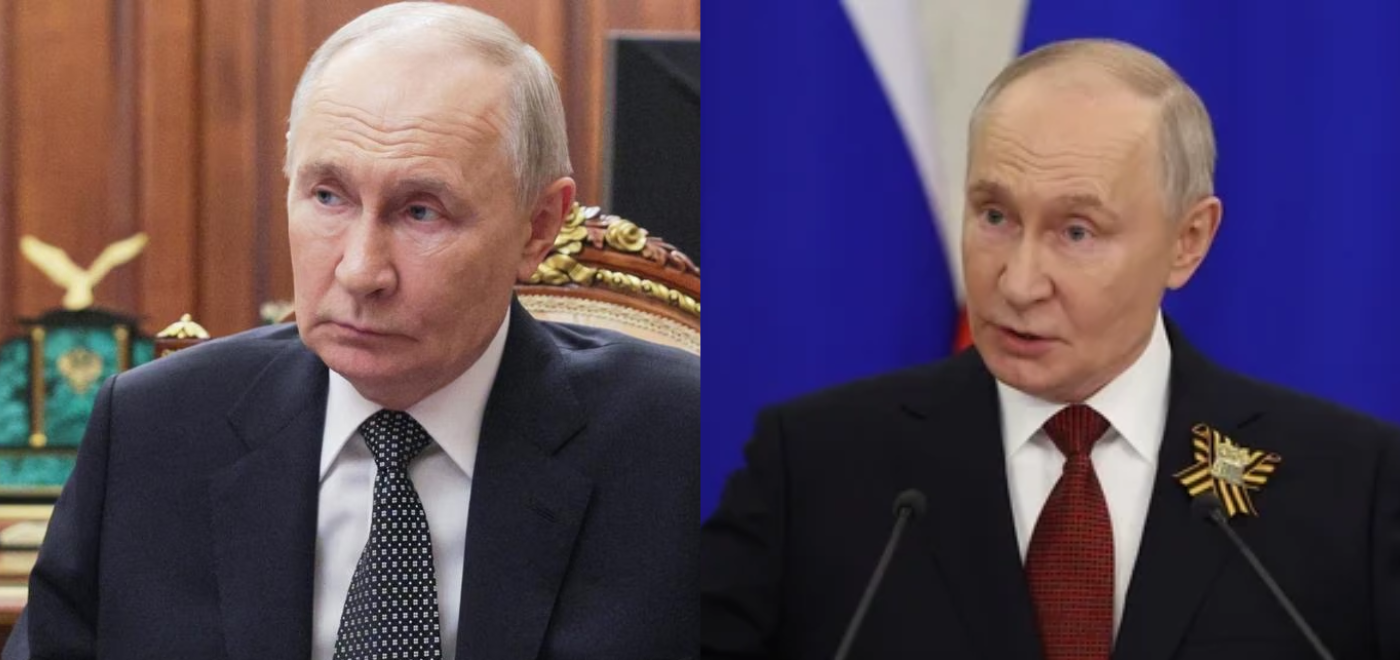
For the first time in what feels like an eternity of trenches, drone warfare, and geopolitical isolation, the world heard a word from the Kremlin that didn’t sound like an ultimatum. Standing in the aftermath of a scaled-back Victory Day parade on Moscow’s Red Square—notably missing the usual columns of tanks due to drone threats—Vladimir Putin suggested that the conflict is “heading to an end.” To those who have followed the war since the fateful morning of February 24, 2022, this sounds like a seismic shift. But is it?
When we talk about the trajectory of Putin Ukraine relations, we aren’t just talking about front lines. We are talking about the endurance of a $3 trillion Russian economy, the patience of the West, and the political survival of a leader who has staked his legacy on this “special military operation.” As a new U.S.-brokered ceasefire takes hold—however tenuously—analysts are scrambling to decode whether this is a genuine attempt to freeze the conflict or simply a tactical pause for Russia to reload. Let’s get into the weeds of what is really happening, why Putin blinked (or didn’t), and what the end of 2026 might look like for Ukraine and the world.
The Changing Narrative: From Maximalism to “Winding Down”
For years, the rhetoric from the Kremlin was predictable: endless stamina, the inevitability of Russian victory, and the weakness of the West. But on May 9, 2026, the tone shifted subtly yet significantly. Putin admitted that the confrontation was “serious,” but he used the phrase “coming to an end” not as a threat, but as an observation. That matters. In the high-stakes world of international diplomacy, language is the first real indicator of intent.
Why the shift? According to strategic analysts, Putin is facing a “wave of anxiety” within the Moscow elite. The war has now lasted longer than the Great Patriotic War (World War II) that the Victory Day parade commemorates. Putin Ukraine For a regime built on stability and historical legitimacy, this is an uncomfortable milestone. While Russian state media continues to show video montages of battlefield advances, the reality is that the spring offensive has bogged down into a “war of attrition,” costing thousands of lives for incremental gains of a few hundred meters. The Russian populace might not know the daily casualty counts, but they feel the sting of rising prices, the mobilization of the economy, and the sight of a Red Square parade without hardware.
Furthermore, the recent three-day ceasefire, which included a prisoner exchange of 1,000 soldiers, represents a humanitarian gesture that usually precedes deeper negotiations. Putin mentioned he is now open to meeting Volodymyr Zelenskyy in a third country—something he previously resisted, preferring that the Ukrainian leader come to Moscow. However, there’s a catch, and it’s a big one. Putin insists that such a meeting can only happen after a final peace treaty is drafted. This is the classic negotiation tactic of wanting the deal done before the handshake occurs.
The Phases of the Invasion: A Timeline of Chaos and Resilience
To understand where we are going, we have to remember how we got here. The Putin Ukraine war has gone through distinct phases, each shattering assumptions on both sides.
When the full-scale invasion launched in February 2022, the expectation in Moscow was a blitzkrieg—a three-day victory where Kyiv would fall. Instead, Putin Ukraine threw Russian forces back from Chernihiv and the outskirts of the capital. That was Phase One: The failure of the Northern front.
Phase Two saw Russia regroup and focus on the Donbas. The Battle of Bakhmut became a meat grinder, a 10-month-long slugfest that Russia eventually claimed victory in by May 2023, but at a staggering cost of tens of thousands of Wagner mercenaries.
Phase Three was Putin Ukraine counteroffensives. In the fall of 2022, Putin Ukraine liberated Kherson and vast swaths of Kharkiv. Russia responded with illegal annexation claims—declaring Kherson, Donetsk, Luhansk, and Zaporizhzhia Russian land, even though they didn’t fully control them—a bluff that tied Putin’s hands politically going forward.
Phase Four introduced the wildcard: Kursk. In August 2024, Putin Ukraine launched a shocking incursion into Russian territory, embarrassing the Kremlin. It took Russia until April 2025 to finally eject Ukrainian troops from that region.
Today, we are in Phase Five: The slow grind. Russia currently controls just under one-fifth of Ukrainian territory, primarily in the east and south. They have taken cities like Avdiivka and Chasiv Yar, but they have not achieved a breakthrough to capture the major logistical hubs like Kramatorsk or Sloviansk. It is this stalemate that is driving the current talk of a frozen conflict.
The Economic Battlefield: Oil Profits vs. Structural Decay
You cannot understand Putin’s strategic calculus without looking at his desk in the Kremlin. On one side, there is a stack of reports about Putin Ukrainelong-range drone strikes hitting Russian energy infrastructure. On the other hand, there is the fluctuating price of oil.
For a while, the conflict in the Middle East—specifically the war involving Iran—acted as an economic lifeboat for Russia. Oil prices surged, giving Moscow a temporary windfall of petrodollars. This led Putin to believe he could “buy more time” to stay the course of high-intensity operations. However, that windfall has been described as significantly “below hopeful assessments.” Putin Ukraine has become remarkably adept at striking the “shadow fleet” of tankers and refineries deep inside Russia, bleeding the cash cow dry.
Domestically, the “structural recession” is biting. The Russian economy is being hollowed out. While defense spending is up, civilian sectors are suffering from labor shortages and a brain drain. The Levada Center has noted a “darkening of social perspectives”—a fancy way of saying Russians are getting depressed and tired. This economic fatigue is the silent factor pushing Putin toward a freeze. He needs a pause to stabilize the ruble, rebuild warehouses, and rotate troops. A real question emerges: Is Putin’s push for peace a genuine olive branch, or is it the exhaustion of an economy running on fumes?
The U.S. Factor: Trump, Alaska, and the Art of the Deal
No analysis of the current situation is complete without discussing the revolving door of the White House. The return of Donald Trump to the presidency has fundamentally altered the chessboard. Unlike the Biden administration, which pursued a strategy of isolation and maximum financial pressure on Russia, Trump has signaled a desire to cut a deal.
The summit in Alaska (August 2025) was the first meeting between a U.S. and Russian president in four years. While it was hailed as a step forward, the details are messy. Reports suggest that Washington’s initial proposals were drafted without input from Europe, essentially asking Putin Ukraine to withdraw from the Donetsk region in exchange for a ceasefire. Naturally, this alarmed Ukrainian and European leaders, who fear a repeat of the Minsk agreements—accords that froze the conflict in 2015 only to give Russia time to rearm for 2022.
A telling moment occurred in late April 2026 when Putin and Trump spoke for 90 minutes. The call was expected to yield progress, but according to the Jamestown Foundation, Putin merely “reiterated his false claims” about territorial gains rather than negotiating in good faith. The result? The Pentagon immediately “unfroze” a $400 million aid package to Putin Ukraine. It was a clear signal that even Trump has his limits when it comes to Putin’s intransigence.
This dynamic creates a dangerous uncertainty. Putin might be hoping that the U.S. gets distracted by its own conflicts (and the Iran situation) and abandons Europe. This hope informs his current negotiation stance: wait it out, break Western cohesion, and then strike.
The “Freeze” Strategy: Breaking Down Putin’s Long Game
Let’s stop using the word “peace” for a moment. In Kremlin-speak, peace does not mean the end of hostility; it means the consolidation of gains. Sergey Ivashchenko, a strategic analyst, argues that freezing the war is Putin’s primary objective right now—not for the sake of ending lives, but for the sake of winning the next war.
Here is the hard truth of the strategy: A frozen conflict is not a resolution; it is a timeout.
If the fighting stops today, Russia gets to rebuild its decimated units. They can rotate the exhausted soldiers, repair the tanks damaged in Putin Ukraine, and test new drones. Meanwhile, the West will inevitably turn its attention back to domestic issues. Support for Putin Ukraine will dwindle as economic recessions hit Germany and France.
Then comes the second stage. Once Russia is rebuilt, Putin could turn his attention to NATO’s eastern flank. The Suwalki Corridor—a 100-kilometer stretch of land between Poland and Lithuania—is a strategic weak point. The theory goes that a restored Russian army could cut this corridor, isolating the Baltic states. Faced with a nuclear-armed Russia, a fractured NATO might decide not to invoke Article 5, effectively collapsing the alliance. This is the grand prize Putin is eyeing: the dissolution of the post-Cold War security order.
Therefore, when we analyze the current ceasefire and prisoner swap, we have to ask: Is Putin taking the deal because he is weak, or because he is cunning? The evidence suggests he sees a pause as a military necessity to achieve his ultimate geopolitical goals.
The Human Cost and the Propaganda War
Behind the strategy and the economics are real lives. Just days before declaring the war was “ending,” Russia launched aerial attacks on Zaporizhzhia, wounding at least 26 civilians and destroying residential buildings. This is the schizophrenic nature of the conflict: words of peace are spoken in Moscow while bombs fall on Ukrainian high-rises.
On the Russian side, the security situation is also frayed. The May 9 parade was scaled down specifically because of the threat of Ukrainian long-range drones. For the first time, no tanks were rolling through Red Square. That visual is staggering. The Kremlin, which relies on projecting strength, cannot guarantee the safety of its own military parade. This demonstrates that the war has come home to Russia in a way that Putin cannot hide.
Moreover, the information war is intensifying. Russian pundits are starting to argue that agreements with the U.S. are “inherently tentative.” There is a growing sentiment that Russia cannot trust the West and must rely solely on its own nuclear deterrent for security. This is dangerous, as it lowers the threshold for nuclear signaling should the tide turn against Moscow.
The Diplomatic Road Ahead: What Comes Next?
Where do we go from here? With the May 2026 ceasefire holding for now, the prospect of a “Korean scenario” for Putin Ukraine becomes more likely. This would mean a heavily fortified border, a demilitarized zone (DMZ), and no formal peace treaty—just an armistice that leaves Putin Ukraine out of NATO but potentially inside the EU.
Putin has stated he is ready to meet Zelenskyy only to “endorse a comprehensive accord.” However, Zelenskyy is unlikely to agree to a deal that formalizes Russian control over occupied land without strong security guarantees from the U.S. and Europe.
The wild card remains the internal Russian situation. While Putin publicly remains confident, analysts note a “distinct darkening” of morale in the upper echelons of power. The war is unwinnable in the traditional sense; Russia cannot conquer all of Putin Ukraine without a total mobilization that would crash the economy. Yet, Putin Ukraine cannot push Russia out of Crimea and Donbas without Western jets and long-range missiles that take years to deliver.
Thus, we are likely stuck in a paradox. The war will end not with a bang, but with a sigh. It will end when both sides are too exhausted to continue, forced to accept a line in the dirt that neither is happy with. For now, Putin is signaling he is ready for that sigh. The question is whether the West is willing to let him catch his breath.
Quotes from the Frontline of Diplomacy
Vladimir Putin (May 9, 2026): “They spent months waiting for Russia to suffer a crushing defeat, for its statehood to collapse. It didn’t work out. I think it (the conflict) is heading to an end.”
Western Strategic Analysis: “Putin’s main attention has been on the Russian economy… the decisive driver in the war of attrition.”
Kremlin Stance on Peace: “A meeting in a third country is only possible… after a peace treaty aimed at a long-term historic perspective is finalized. This should be a final deal, not the negotiations.”
Conclusion
The trajectory of the Putin Ukraine conflict is at a crossroads. After four grueling years, the Russian president appears to be signaling a desire to exit the stage, albeit on his own terms. His declaration that the war is “winding down” is a strategic pivot born of necessity: a strained economy, a populace weary of war, and battlefield realities that have dashed hopes of a swift conquest of the Donbas. However, as we have seen with the abridged military parade and the ongoing attacks, the definition of “ending” is fluid. For Putin Ukraine, the challenge remains existential. They face the prospect of a frozen conflict that leaves a hostile, nuclear-armed neighbor on their doorstep, sharpening its knives for the next round. For the world, this is a test of endurance. Will the West see a ceasefire as a victory, or will it recognize it as the pause before a potentially more dangerous confrontation with NATO’s eastern flank? The silence of the guns, if it comes, may be the most dangerous noise we have heard yet.
Frequently Asked Questions
What did Putin specifically say about the Putin Ukraine war ending?
During the 2026 Victory Day commemorations, Vladimir Putin told reporters that he believes the conflict is “coming to an end.” He framed this within the context of Russia’s resilience, claiming that the West’s plan to inflict a “crushing defeat” on Russia failed. He also reiterated that Russia is open to diplomacy but insisted that any peace deal must be finalized before a summit with Volodymyr Zelenskyy can occur. This marks a rhetorical shift from demanding surrender to discussing an endpoint.
Why was the 2026 Victory Day parade scaled down?
The parade in Moscow’s Red Square was significantly smaller than in previous years, notably missing the traditional columns of tanks and heavy military hardware. The primary reason cited by security analysts is the increased threat from Ukrainian long-range drone strikes. The Kremlin feared that a large concentration of armor on Red Square could be a target. Instead, the parade featured infantry battalions and video screen footage of the combat in Putin Ukraine.
What is Putin’s strategy if the war freezes?
Strategic analysts suggest that Putin views a frozen conflict not as peace, but as a tactical pause, often called a “freeze.” His objectives are to rebuild Russia’s depleted military forces, restock ammunition, and revitalize the war economy. Simultaneously, he hopes that Western attention will wane, reducing military aid to Putin Ukraine. Once rebuilt, a bolstered Russian army could potentially target weaker NATO allies or resume the offensive in Ukraine with renewed force.
Has the U.S. changed its policy toward Putin Ukraine under Trump?
Yes, the dynamics have shifted. Under President Trump, there has been a push for direct U.S.-Russia negotiations, including a significant summit in Alaska. While the U.S. has unfrozen some military aid packages, the approach is widely seen as more transactional than under previous administrations. There is concern in Europe and Ukraine that the U.S. might pressure Kyiv into territorial concessions to secure a quick deal, though recent $400 million aid packages show continued, if conditional, support.
What territories does Russia currently control?
As of mid-2026, Russia controls just under one-fifth of Ukrainian territory. This includes the Crimean Peninsula (seized in 2014), nearly all of the Luhansk region, large parts of Donetsk and Zaporizhzhia, and a critical land bridge connecting Russia to Crimea. While Russia claimed to have taken the whole of Luhansk by June 2025, they have struggled to push past the fortress cities of Kramatorsk and Sloviansk in Donetsk.