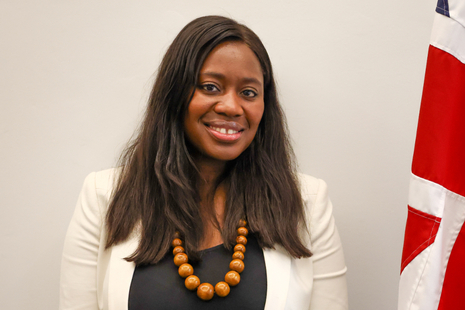
When you hear the name Miatta Fahnbulleh, you might think of a rising political star, a disruptive economist, or maybe the familiar face from Question Time debating the cost-of-living crisis. But to truly understand the force of nature that she is, you need to look at the journey—one that stretches from the civil war-torn streets of Liberia to the corridors of Westminster. In the landscape of modern British politics, where so many politicians sound like they were manufactured in a laboratory, Fahnbulleh stands out as refreshingly authentic and deeply substantive.
Born in 1979 in Liberia, Miatta Fahnbulleh’s early life was shaped by conflict. Her family fled the First Liberian Civil War when she was just seven years old, seeking asylum in the United Kingdom. This experience of displacement and starting over in a new country has profoundly influenced her worldview. She doesn’t just theorize about poverty or instability; she has lived the reality of rebuilding a life from scratch. Today, she serves as the Labour MP for Peckham and a junior minister, but her story is one of breaking the mold of the traditional British politician. She is a heterodox thinker, a mother of three, and a vocal advocate for a complete overhaul of how we view economic growth.
A Journey from Monrovia to Oxford
It is impossible to separate the politics of Miatta Fahnbulleh from her biography. Arriving in North London as a child who had witnessed the horrors of war, she was thrown into the British education system. Rather than being overwhelmed, she excelled, eventually landing at the prestigious Beechwood Sacred Heart School in Tunbridge Wells. But her intellectual hunger didn’t stop there. She went on to read Philosophy, Politics, and Economics at Lincoln College, Oxford, followed by a Master’s and ultimately a PhD in Economic Development from the London School of Economics (LSE).
This academic pedigree is often cited by her supporters, but what makes her different is how she uses that education. Her PhD thesis focused on industrial policy in Ghana and Kenya—specifically looking at how governments can actively shape markets to create wealth, rather than just letting “the market” run the show. For a long time, this was considered radical, old-school thinking. In the era of austerity and laissez-faire economics, the idea that the state should pick winners or guide industry was taboo. But Fahnbulleh stuck to her guns, and as the economic turmoil of the 2020s unfolded, the mainstream finally started catching up with her.
The Think Tank Years and the New Economics Foundation
Before the glare of the flashbulbs and the chaos of the Commons, Miatta Fahnbulleh was shaping the intellectual battleground. She spent time in the civil service as Head of Cities in the Cabinet Office, giving her a birds-eye view of how policy actually gets made (or fails to). She also served as Director of Policy and Research at the IPPR (Institute for Public Policy Research), a heavyweight progressive think tank. However, her real breakout role came when she took the helm as Chief Executive of the New Economics Foundation (NEF) in 2017.
Leading the NEF put her on the map as a major public intellectual. The foundation is known for its radical, often controversial ideas about well-being economics, the environment, and inequality. Under her leadership, Fahnbulleh became a regular on our television screens. She wasn’t just talking about minor tax adjustments; she was arguing for systemic change—shorter working weeks, a Green New Deal, and public ownership of key utilities. Critics on the right often labeled her extreme, but her fans saw a rare clarity. She has a knack for taking complex economic data and translating it into the real pain or potential felt by voters. This role positioned her perfectly for a run at Parliament, giving her the name recognition that most first-time candidates only dream of.
Entering Politics: The Seat of Peckham
The path to becoming an MP is rarely smooth, but for Miatta Fahnbulleh, the stars aligned in a specific and strategic way. When the legendary Labour figure Harriet Harman announced she would be stepping down after 40 years as the MP for Camberwell and Peckham (later just Peckham), a massive vacancy opened up. This wasn’t just any seat; it was a safe Labour seat with a huge majority, but also one with a history of radical, feminist, and community-focused representation.
Running to succeed Harman is a high-wire act. You have to be big enough to fill those shoes. In November 2022, local members selected Fahnbulleh as their candidate. Her selection made perfect sense: she is a woman of color, a mother, an intellectual, and a practitioner of community economics. When the 2024 general election rolled around, she secured the seat with a majority of over 15,000 votes. Though reduced from Harman’s “unassailable” margins due to the national swing, it was a decisive victory that brought a powerful new voice into the House of Commons.
Ministerial Roles: Energy, Housing, and Devolution
Once elected, the promotion came quickly—almost startlingly so. Many thought Miatta Fahnbulleh would serve on the backbenches for a while, learning the ropes. However, Keir Starmer recognised her expertise immediately. Just days after the election, she was appointed Parliamentary Under-Secretary of State at the Department for Energy Security and Net Zero. It was a perfect fit for her skill set, given her decades of work on climate and economic transition. She worked under Ed Miliband, a figure she had advised during his time as Labour leader, which gave her an immediate “in” to the heart of power.
In this role, she focused heavily on one of the biggest voter concerns: energy bills. With the cost of living squeezing families, she worked on initiatives to secure discounts for vulnerable families and began the foundational work for the “Warm Homes Plan”—an initiative designed to insulate millions of homes to bring down long-term costs.
But her government journey didn’t stop there. By September 2025, she was moved to a new domain: the Ministry of Housing, Communities and Local Government. Taking on the title of Minister for Devolution, Faith and Communities, she was handed one of the most complex briefs in Whitehall. Her portfolio included English devolution—essentially, the messy, difficult task of moving power away from Westminster and into the hands of regional mayors and combined authorities. She also took on the heavy burden of social cohesion, tackling the rising tide of hate and division in communities. It is here that her background in “place-based” economics, where she argues that every town needs a bespoke plan rather than a one-size-fits-all approach, became central government policy.
The Resignation That Shook Westminster
It is rare for a junior minister to make international headlines, but in May 2026, Miatta Fahnbulleh did exactly that. In a move that stunned the political establishment, she became the first minister to resign from Keir Starmer’s government during a period of intense internal turmoil. Her resignation letter, posted publicly on social media, was devastating in its directness. She didn’t just resign; she called on the Prime Minister to set a timetable for his own departure.
In the letter, she expressed pride in her work—specifically citing the energy bill discounts, the “Pride in Place Programme,” and the English Devolution Act. However, she argued that the government had lost its way. “We have not acted with the vision, pace and ambition that our mandate for change demands of us,” she wrote. She cited specific policy failures, such as the controversial cuts to winter fuel payments and support for disabled people, as moments that shattered the public’s trust.
This was a high-risk, career-defining moment. By breaking ranks so publicly, Fahnbulleh signaled that her loyalty to her constituents in Peckham and her ideological vision of a transformative Labour Party outweighed her loyalty to the leadership. While it placed her in the rebel camp, it also cemented her reputation as someone who refuses to toe the party line when her conscience (or her economic logic) tells her the ship is heading in the wrong direction. She demanded an “orderly transition” to a new leadership team capable of delivering the change Labour had promised.
The Political Philosophy: Soft Left or Radical Reformer?
So, where does Miatta Fahnbulleh sit on the political spectrum? The Wikipedia entry conveniently labels her as “soft left”. But that label might be a bit too comfortable for a woman who describes herself as a “heterodox economist”. In plain English, heterodox means she doesn’t buy into the neoliberal rulebook that has dominated Western politics for forty years.
She grew up in an era where the mantra was “there is no alternative” to free markets. Fahnbulleh has spent her career arguing that there is always an alternative. She champions the “take back control” narrative not from a nationalistic standpoint, but from a local one. In a 2023 article for the Fabian Society, envisioning Britain in 2037, she wrote passionately about a “Take Back Control Bill” that devolves massive amounts of funding and power to local areas. She wants regional mayors to have tax powers and control over energy and transport. This isn’t just administrative tinkering; it is a fundamental redistribution of power. She believes that the people who live in a town know how to fix that town better than bureaucrats in Whitehall—an idea that resonates across the political divide.
“The slogan ‘take back control’ finally has meaning in communities across the country… People are beginning to feel that they have a real stake in the economy, and can feel the benefits when it does well.”
— Miatta Fahnbulleh on her vision for devolution.
Life Outside the Commons
Beyond the policy papers and the Parliamentary clashes, Miatta Fahnbulleh lives a very relatable life that keeps her grounded. She is married to a man named Graham, and together they have three children. Balancing the brutal hours of Westminster (which often involve late-night votes) with motherhood is a challenge she has spoken about candidly. She was the recipient of the MotheRED grant, which is specifically designed to help mothers finance the costs of standing for Parliament. This speaks to a huge barrier in politics: the assumption that MPs can work 80-hour weeks without caring responsibilities. By breaking through that barrier, she has become a role model for other working parents.
Her family ties are also fascinating. She shares her name with her aunt, the famous Liberian singer Miatta Fahnbulleh, who is a cultural icon in West Africa. Her uncle, Henry Boimah Fahnbulleh, served as the Foreign Minister of Liberia. So, while she was building a life in the UK, her family’s legacy in Africa is one of diplomacy, culture, and resilience. This dual heritage gives her a unique perspective on international development and foreign policy, which she sometimes draws upon when discussing the long-term roots of instability and migration.
Key Policy Positions and Voting Record
While Miatta Fahnbulleh is new to the Commons, her voting record is beginning to solidify the picture of a socially liberal, economically interventionist politician. One of the most high-profile votes in her early term was on the Terminally Ill Adults (End of Life) Bill, which seeks to legalize assisted dying. In November 2024, she voted in favor of the bill, aligning herself with the movement for individual choice and dignity in death.
On the economy, she is a fierce critic of the “Washington Consensus.” She has argued that the Treasury’s fiscal rules often act as a straitjacket, preventing necessary investment. She is likely to push for redefining the UK’s debt rules to allow for borrowing to invest in the green transition. This puts her on the more radical wing of the Labour party regarding fiscal policy. She doesn’t just want to manage capitalism; she wants to reshape the markets to serve public good, utilizing state power to drive innovation and industrial strategy.
The Future: What’s Next for Miatta?
The resignation in May 2026 was a turning point. By calling for a leadership transition, Miatta Fahnbulleh has burned some bridges but built new alliances with the Labour grassroots who feel betrayed by the government’s U-turns on green investment and welfare. It positions her as a potential kingmaker or, depending on who takes over, a future shadow cabinet member.
Her future likely hinges on two things: the chaos of the Labour leadership contest and her own ability to turn her popularity in Peckham into national influence. She has the profile of a future leadership contender herself—she is telegenic, eloquent, and, crucially, connected to the intellectual engines of the left. Whether she remains a minister in a future administration or returns to the backbenches to write books and agitate for change, Miatta Fahnbulleh has already altered the conversation. She has proven that you don’t have to abandon economic radicalism to succeed in politics; you just have to learn how to translate it into the language of the kitchen table.
Table: Key Milestones in Miatta Fahnbulleh’s Career
| Year | Position / Achievement | Organization / Role |
|---|---|---|
| 2000 | BA in Philosophy, Politics & Economics | University of Oxford (Lincoln College) |
| 2005 | PhD in Economic Development | London School of Economics (LSE) |
| 2011-2013 | Head of Cities | Cabinet Office (Policy Unit) |
| 2016-2017 | Director of Policy and Research | IPPR (Institute for Public Policy Research) |
| 2017-2023 | Chief Executive Officer | New Economics Foundation (NEF) |
| 2022 | Selected as Parliamentary Candidate | Labour Party (Peckham) |
| July 2024 | Elected as MP for Peckham | House of Commons |
| July 2024 | Parliamentary Under-Secretary | Dept for Energy Security & Net Zero |
| Sep 2025 | Minister for Devolution, Faith & Communities | Ministry of Housing, Communities & Local Government |
| May 2026 | Resignation & Call for Leadership Change | First Minister to resign from Starmer Govt |
Frequently Asked Questions
What is Miatta Fahnbulleh’s educational background?
Miatta Fahnbulleh has an exceptional academic record. She studied Philosophy, Politics, and Economics at Lincoln College, Oxford, graduating in 2000. She then went on to complete a PhD in Economic Development at the London School of Economics (LSE) in 2005. Her doctoral thesis specifically focused on industrial policy in the African nations of Ghana and Kenya, looking at how governments can successfully drive economic growth.
Why did Miatta Fahnbulleh resign from the government?
Miatta Fahnbulleh resigned as Minister for Devolution, Faith, and Communities in May 2026 because she felt the government had lost its way. In her resignation letter, she stated that Prime Minister Keir Starmer had “lost the trust and confidence of the public”. She cited specific policy mistakes like cuts to winter fuel payments and disability support, arguing that the administration lacked the “vision, pace, and ambition” required to deliver real change, and she urged the Prime Minister to set a timetable for an orderly transition of leadership.
Is Miatta Fahnbulleh related to the singer Miatta Fahnbulleh?
Yes, she is. Miatta Fahnbulleh shares her name with her aunt, who is a very famous singer in Liberia and across West Africa. The singer, known as the “Iron Butterfly,” is a cultural icon. This is a common point of curiosity for people searching for the politician, as the singer has a long-standing legacy in African music.
Which political party does Miatta Fahnbulleh belong to?
Miatta Fahnbulleh is a member of the Labour and Co-operative parties. She is considered to be on the “soft left” of the Labour Party. However, her economic views are often described as “heterodox,” meaning she diverges significantly from mainstream free-market economics, advocating for public ownership, a Green New Deal, and radical devolution of power away from central government.
Where does Miatta Fahnbulleh represent as an MP?
Miatta Fahnbulleh is the Member of Parliament for Peckham. She was elected in the 2024 general election, succeeding the long-serving Labour MP Harriet Harman. The constituency is a safe Labour seat located in inner London, covering areas including Peckham, Camberwell, and Dulwich.
Conclusion
Miatta Fahnbulleh is not your standard Westminster politician. She is an intellectual powerhouse who got her hands dirty in the think-tank world long before she ever stepped foot in the Commons. Her trajectory—from fleeing war in Liberia to shaping energy policy for millions of Britons—is a testament to the enduring promise of a society that welcomes talent.
While her recent resignation has made headlines for its political drama, the deeper story is one of ideological consistency. She refused to compromise on her vision of a transformative, devolved, and green economy. Whether she is sitting at the cabinet table or advocating from the backbenches, one thing is certain: the voice of Miatta Fahnbulleh will remain central to the conversation about what Britain should look like in the twenty-first century. She represents a new class of politician who prioritizes impact over internal advancement, and in doing so, has earned a level of respect that few junior ministers ever achieve.
You May Also Read
- The Rise of the New Economics Foundation and its impact on Labour policy
- Profiles of the 2024 “Red Wall” MPs changing the face of the North of England
- A deep dive into the “Heterodox Economics” movement reshaping global thinking
- Who is Ed Miliband? The green warrior’s return to government
- The history of the Peckham constituency and the legacy of Harriet Harman